Blog
A Tale of a Boy and His Dog’

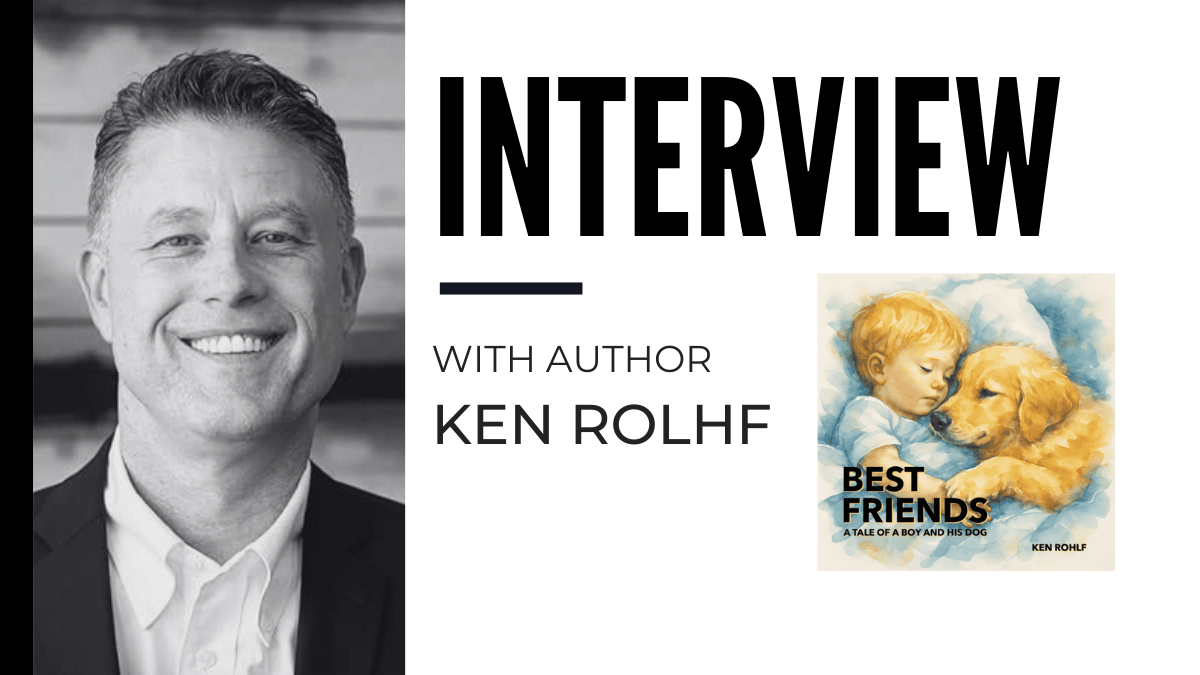
An interview about Best Friends, A Tale of a Boy and His Dog by Ken Rohlf for The Children’s Book Review.
In this conversation, Ken Rohlf shares the inspiration for Best Friends: A Tale of a Boy and His Dog, a heartfelt story that captures the quiet, enduring bond between a child and his pet.
Ken Rohlf’s heartfelt portrait of a friendship that evolves quietly over time, builds on shared moments, trust, and unconditional love. Drawing from personal inspiration and everyday experiences, the story traces the arc of a boy and his dog as they grow up side by side. Rohlf reflects on the emotional core of the book, the challenge of conveying depth within the picture book format, and his desire to create stories that linger in a child’s heart long after the final page.
Your first two picture books were deeply personal — written for your grandson and inspired by your late wife. What drew you to the boy-and-dog friendship as the subject for your third book?
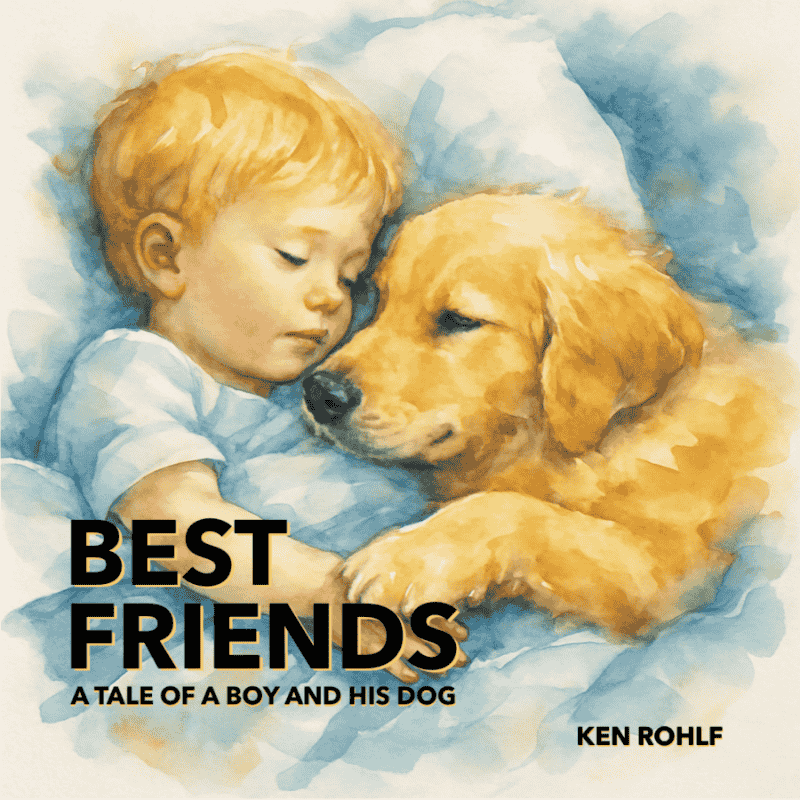
Ken Rohlf (KR): Actually, although this is the third book I’ve released, it was the very first children’s book I ever wrote. In the fall of 2024, my daughter announced she was pregnant with our family’s first grandchild, and I found myself reflecting on their situation. They had a young Golden Retriever at home and a baby on the way, and I became captivated by the idea of what would unfold between them. I began imagining the arc of that relationship and how it would grow and deepen over time as a sweet, gentle dog and a brand-new little boy discovered and experienced the world together. That image planted the seed for the whole story.
You came to picture book writing relatively recently, after more than 30 years as an attorney. What has surprised you most about the craft of writing for young children?
KR: Honestly, the biggest surprise has been just how difficult it is to tell a meaningful story within such a limited number of age-appropriate words. Anyone who has read my books knows that I don’t aim for simple filler. Rather, I want each of my books to actually say or teach something. Provide a lesson, if you will. What I’ve discovered is that young children are far more capable than we often give them credit for. A two-year-old can grasp a great deal more than ‘See Spot Run.’ When I read to my grandson, I can literally watch the wheels turning in his little mind, and that, to me, is the whole reward.
What role has your grandson played in shaping your sense of what children need from books right now?
KR: Oliver has been the heartbeat behind every book I’ve written. My first book, Christmas Sun, was written to keep the memory of his late grandmother alive for him and for other young children who have experienced similar loss. My second book, For You, I Hope, is my way of sharing all the qualities and gifts I wish for Oliver (and other young children) as they grow. Both books have been warmly received and have become bestsellers, which has meant the world to me.
With Best Friends, I wanted to go a step further and give children a story that genuinely makes them think. One reviewer, an educator, captured it perfectly—she wrote that the book could be used to explore themes of friendship, empathy, and caring for others. That kind of response tells me I have hit the mark.
This book is about the kind of friendship that doesn’t need words. How did you go about capturing something so wordless and felt within the constraints of a picture book?
KR: In some ways, the visual side of this book came most naturally to me. The story and its scenes seemed to almost suggest their own images. In other words, each moment lent itself to a picture that could stand alongside the words and deepen them. What has been most gratifying is hearing from reviewers that the illustrations essentially tell the story on their own, even without the text. For a book about a bond that exists beyond words, I can’t think of a better compliment than that.
The story emphasizes quiet, everyday moments — a shared glance, a paw on a hand. How did you decide what scenes and details belonged in the story?
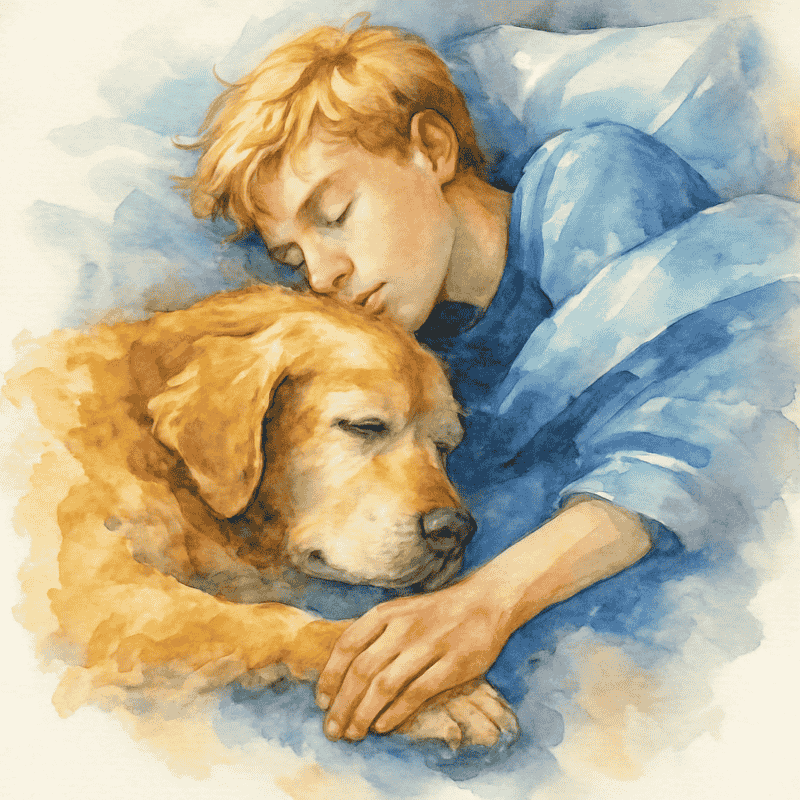
KR: My guiding instinct for the story was relatability. I wanted every scene to feel familiar to its readers, sharing the kind of moment a child or parent would recognize from their own life. So, I drew on the simple, everyday rhythms that shape a childhood: bedtime routines, the playful mischief a little one inevitably inflicts on the family dog, and the milestone of learning to ride a bike (including the inevitable skinned knee). And then, as the boy grows into a teenager, the tender experience of caring for an aging dog. These are moments that nearly every reader has lived in some form, and that familiarity is what makes the emotional core of the story feel true and earned.
Your first book, Christmas Sun, was rooted in grief and memory. Best Friends feels lighter in tone, yet still emotionally weighty. How do you think about the emotional register you’re aiming for when writing for young readers?
KR: I’ve always believed that young children are far more perceptive than we tend to assume, and I try to honor that in everything I write. My goal is never simply to entertain. Rather, it’s to leave the reader, young or old, with something meaningful to carry with them. Even if a child is unable to yet articulate what a story made them feel, I want it to plant something that stays.
This book speaks to children and adults alike. Was there a specific reader you held in mind as you wrote — a child, a grandparent, a dog owner?
KR: In many ways, I wrote this book for anyone who has ever loved a dog, whether that dog is curled up at their feet right now or lives only in their memory. I think most people who pick up Best Friends will bring their own experience with them, and that personal connection is what gives the story its resonance.
But if I’m being specific, I had two readers in mind at once as I wrote the book. I wanted the child in the room to be drawn in, delighted, and moved in that instinctive way children feel things before they have the words for it. And I wanted the adult reading alongside — the parent, the grandparent — to find themselves quietly transported back to their own childhood dog, their own version of that bond. When a picture book can operate on both of those levels simultaneously, creating wonder in the child and nostalgia in the adult, I think that’s when it truly becomes something special.
You’ve now had two award-winning and best-selling books. How has that reception changed, if at all, the way you approach writing — or does each book still feel like starting from scratch?
KR: In all honesty, each book still feels like starting from scratch, and I think that’s the way it should be. The recognition has been deeply gratifying, but I don’t think past success makes the blank page any less daunting, or any less exciting.
For me, it always begins in the same place: inspiration. I have to feel genuinely moved by a story idea before I can do anything with it. From there, I begin to envision the scenes, the words, the images that might bring the story to life. But none of that can happen until I have a foundation worth building on and a storyline that carries a real message, something a young reader can take with them long after the book is closed. That’s the standard I hold myself to, regardless of what the last book did.
What do you hope a child takes away from Best Friends after the last page — not just in the moment, but in the years to come?
KR: More than anything, I hope they come away with a felt sense of unconditional love — even if they won’t have that phrase for it yet. There is something profound about the way a dog greets you at the door, that wagging tail and pure, uncomplicated joy that asks nothing in return. I want children to recognize that feeling, to treasure it, and to understand that it’s real.
But I also hope the book plants a seed about reciprocity. That love like that deserves to be returned in kind. As the boy in the story grows, he comes to care for his aging dog with the same devotion the dog always showed him. I’d love for a child to carry that lesson forward: that the people and animals who love us unconditionally are worthy of our own unconditional care. If a child holds onto that truth, then the book has done exactly what I hoped it would.
Where does your writing take you next?
KR: Honestly? I’m not quite sure yet. I have a few ideas quietly percolating, but nothing has moved me deeply enough to put pen to paper just yet. For me, that spark of genuine inspiration is non-negotiable. I won’t start until a meaningful, memorable story truly calls me.
What I can say is that I keep my eyes open every day. The best storylines have a way of revealing themselves in ordinary moments. You just have to keep paying attention. So stay tuned.
About the Book
Publisher’s Book Summary: There is no greater bond than the love that develops between a young boy and his devoted dog as they grow up together. Best Friends is a sweet and touching story that teaches how a young boy can learn the meaning of unconditional love from his dog.
Buy the Book
About the Author
Ken Rohlf’s journey as a children’s book author began from deeply personal beginnings. Namely, the loss of his beloved wife, Sherri, on Christmas Day after a courageous battle with pancreatic cancer, and the joyful arrival of his first grandchild. From grief and new beginnings, a storyteller was born.
Ken’s debut book, Christmas Sun: A Beautiful Tradition to Remember Grandma, quickly found its way into the hearts of readers young and old. Told through the eyes of a polar bear family, it approaches the tender subject of loss with simplicity, honesty, and warmth while offering families a beautiful tradition to keep the memory of a loved one alive forever.
His second book, For You, I Hope, is a heartfelt gift of encouragement and wisdom from a caring adult to the young children they cherish. Radiating warmth and positivity, it’s a book that parents, grandparents, and family members will return to again and again throughout a child’s life to deliver meaningful, memorable messages.
Ken’s third book, Best Friends: A Tale of a Boy and His Dog, scheduled for release in May 2025, is a touching coming-of-age story celebrating the unconditional love and the unbreakable bond that develops between a boy and his puppy.
A Minnesota native, Ken grew up in South St. Paul, attended the University of Minnesota, and earned his law degree from the U of M Law School. He has practiced law for more than 30 years and currently serves as General Counsel for a large corporation. Ken resides in St. Louis Park, Minnesota, where he is a proud father of two and a devoted grandfather — a role that continues to inspire every word he writes.
For more information, visit www.kenrohlfbooks.com.

This interview—Interview with Ken Rohlf, Creator of ‘Best Friends, A Tale of a Boy and His Dog’—was conducted between Ken Rohlf and Bianca Schulze.
*Disclosure: Please note that this post may contain affiliate links that share some commission. Rest assured that these will not affect the cost of any products and services promoted here. Our team always provides their authentic opinion in all content published on this site.