Blog
War of Wyverns by S.F. Williamson Book Reviews

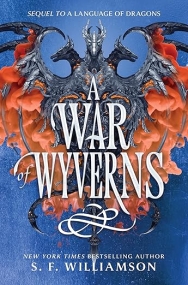
Picking up after the events of book one, Vivien Featherswallow finds herself no longer just a scholar or translator, but a key player in a conflict spiraling beyond anyone’s control. Dragons and humans stand on the brink of irreversible destruction, and Vivien’s rare ability to understand dragon language may be the last fragile bridge between annihilation and peace.
A World at War
This is a darker, heavier book, and intentionally so. A War of Wyverns leans into the chaos and moral ambiguity of wartime—alliances shift, motivations blur, and every decision carries consequences that cannot be undone. Williamson excels at showing how war erodes certainty, especially for someone like Vivien, who once believed knowledge alone could fix what was broken.
The political maneuvering and dragon lore are more complex here, rewarding readers who enjoy layered worldbuilding. The wyverns themselves add a new dimension to the mythology, expanding the series beyond what felt possible in the first book.
Language as Power
One of the series’ greatest strengths remains its focus on language—not as decoration, but as a living force. Translation is dangerous. Words can heal or devastate. Vivien’s role as a linguist continues to feel refreshingly different in a genre that often prioritizes brute strength over intellect.
At times, the pacing slows under the weight of this complexity, particularly in the middle sections, but for readers invested in the themes, it feels purposeful rather than indulgent.
Character Growth & Emotional Cost
Vivien’s arc is one of grief, responsibility, and reluctant leadership. She is more fractured here, more uncertain, and that vulnerability gives the story its emotional core. Some secondary characters remain frustratingly underdeveloped, and the romantic elements may not resonate with every reader, but the emotional toll of war is unmistakable—and deeply felt.
Final Thoughts
A War of Wyverns is not a comfortable sequel, but it is an ambitious one. It challenges the idea that knowledge alone can save the world, asking more complex questions about power, sacrifice, and what peace truly costs. While it may feel uneven at times, its strengths—rich worldbuilding, thoughtful themes, and a heroine forced to grow beyond her own ideals—make it a compelling continuation of the series.
This is a book for readers who enjoy dragon fantasy with political depth, morally complex conflicts, and stories that aren’t afraid to let their characters—and their worlds—break before they heal.