Blog
From Bunny and Clyde to Fairy Doors

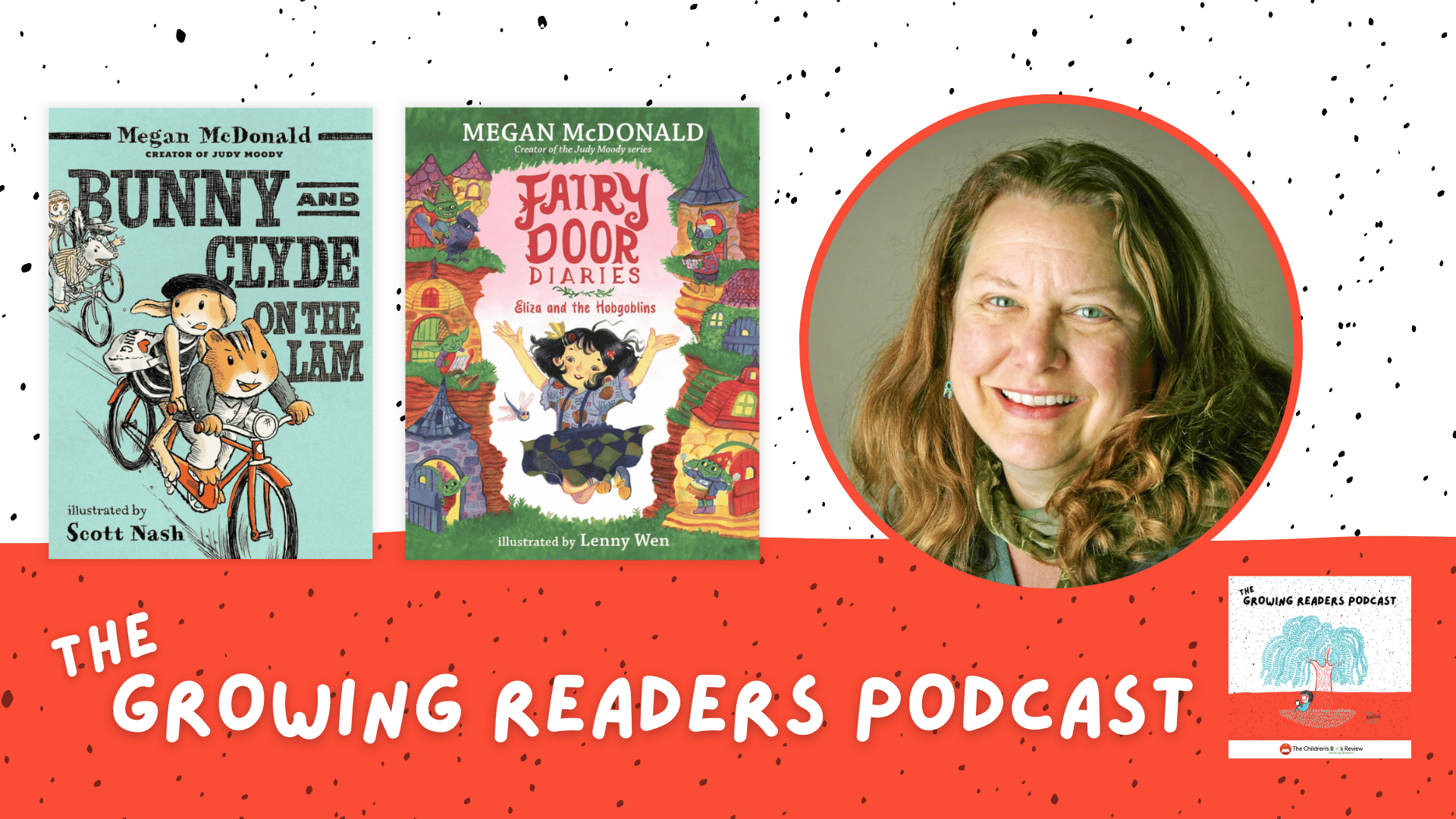
A podcast interview with Megan McDonald discussing Bunny and Clyde on the Lam and Fairy Door Diaries: Eliza and the Hobgoblins on The Growing Readers Podcast, a production of The Children’s Book Review.
Megan McDonald, the mastermind behind Judy Moody, explores themes of mischief, friendship, and wonder in her latest works—a comedic romp featuring two framed fugitives and a fairy-tale adventure brimming with hobgoblin tricks.
What happens when lovable characters keep getting mistaken for troublemakers—or when a messy room becomes a portal to a world of mischievous magic? In this episode, Megan McDonald reveals how she crafts stories where misunderstandings lead to wild adventures and ordinary moments turn extraordinary. From Bunny and Clyde’s hilarious attempts at being bad (that always turn out good) to Eliza’s encounters with tricky hobgoblins behind a tiny fairy door, Megan explores the joy of chaos, the power of friendship, and the magic hiding in plain sight.
Listen now to uncover the magic behind Megan’s mischievous worlds—and explore why stories that embrace mistakes and imagination are essential for young readers today.
Subscribe to The Growing Readers Podcast to ensure you never miss an episode celebrating the creators shaping young readers’ lives.
Listen to the Episode
The Show Notes
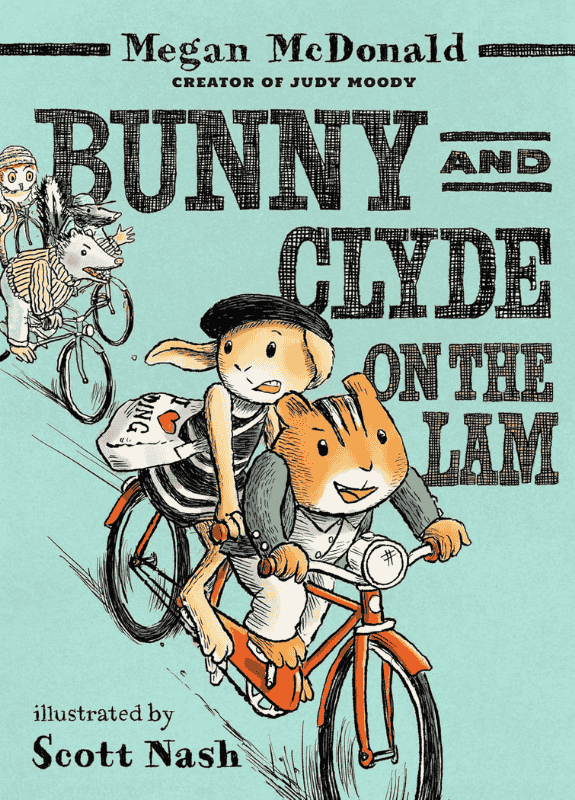
Publisher’s Summary: They couldn’t be outlaws when they tried, but now they’re being framed as fall guys? Judy Moody creator Megan McDonald and illustrator Scott Nash bring back the lovable pair for a comedy full of mischief, magic tricks, and misperceptions.
Thornton’s shiny new coin has vanished into thin air! Did someone steal it? All eyes fall on Bunny and Clyde, two bad bunnies at the scene of the crime. But wait! They’re not bad bunnies. For one thing, Clyde is a chipmunk. For another thing, every time they’ve tried to be bad, they somehow came out looking as good as gold. Now, when they really are I-N-N-O-C-E-N-T, everyone decides they’re guilty? In a tight spot like this, there is only one thing for a declared pair of outlaws to do.
“RUN!” says Bunny.
“RUN!” says Clyde.
They’re on the lam! Will the fugitives be able to outrun the possum posse and shake their bum rap? Buckle up for another wild and wicked ride with Bunny and Clyde!
Buy the Book
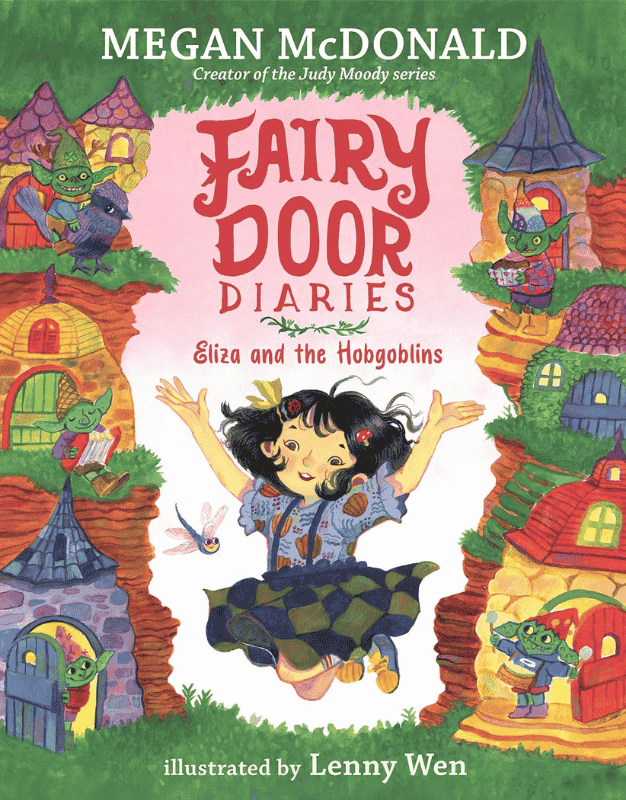
Publisher’s Summary: Eliza has a second adventure on the other side of the fairy door—and must call on her wits when a band of impish hobgoblins follows her home—in this enchanting tale by the award-winning author of the Judy Moody series.
What’s that? Eliza hears faint music coming from behind the teeny-tiny fairy door she created low on the wall. So she presses her ear to the door and—shwoosh!—is whisked into the red, rocky land of hobgoblins, leaving behind the heaps of toys and books that were strewn around her room (along with her mother’s orders to clean them up). Luckily, Eliza discovers that the pointy-hatted hobs love to play, love a mess, and can grant wishes! But when she wishes that Hobby, Nobby, and Tobby would help her with her room, she learns that what hobgoblins actually love is playing tricks—and as they burst into her space, it’s clear that she’s fallen for their trickery. Can she outrun their mischief before they decorate all of her walls with crayon and turn her ceiling fan into a hobgoblin merry-go-round? Just maybe . . . but only if she can come up with a few tricks of her own! Megan McDonald’s follow-up to Eliza and the Flower Fairies, illustrated in glowing full color by Lenny Wen, is sure to be happily devoured by every child who fervently believes in fairies and other magical folk.
Buy the Book
Additional Books Mentioned:
About the Author
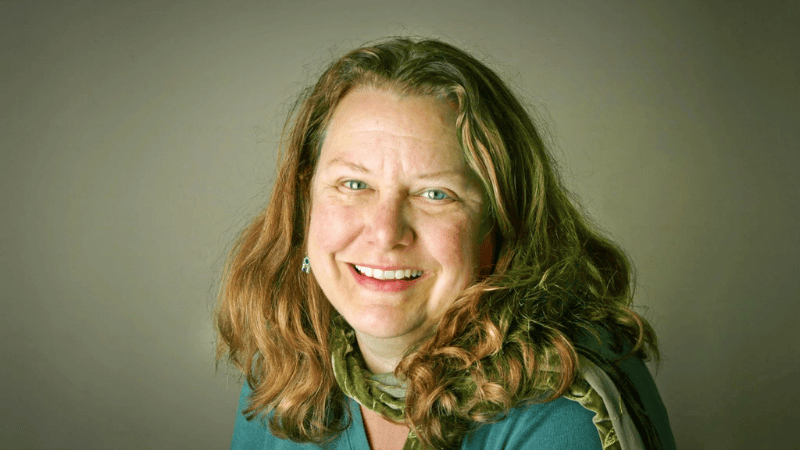
Megan McDonald is the author of the hugely popular Judy Moody and Stink series, for older readers, the Judy Moody and Friends series for beginning readers, and the first chapter book Bunny and Clyde. She has also written many other chapter books and picture books for children. She earned a BA in English from Oberlin College and an MLIS degree from the University of Pittsburgh. Born and raised in Pittsburgh, Megan McDonald now lives in Sebastopol, California.
Credits:
Host: Bianca Schulze
Guest: Megan McDonald
Producer: Bianca Schulze
Read the Transcript
Bianca Schulze: Hi, Megan. Welcome to The Growing Readers Podcast.
Megan McDonald: Bianca, I’m so excited to be here. Thank you for having me.
Bianca Schulze: I’m so excited that we were able to coordinate and have you, because you’re just such a gem for the children’s lit community. To be able to chat with you today is going to be so great.
Megan McDonald: Thank you.
Bianca Schulze: So I have a question that I love to ask pretty much everybody that comes on the show, and that is—to be a writer, they say that you need to be a reader first. So was there a pivotal moment when you considered yourself a reader?
Megan McDonald: Well, I’m very lucky to be a reader because I grew up in a house full of books. My dad was an ironworker. He only had an eighth-grade education—he had to drop out of eighth grade to support his family. So he made up for his lack of education by reading, and reading was just thought of as the penultimate thing. I have four older sisters, so we were all readers. We didn’t have a local library at the time, so we had a bookmobile. I grew up in Pittsburgh, Pennsylvania, and the Carnegie Library was the big, beautiful library. But the bookmobile would come—this big green truck would come to the shopping center, and my sisters and I would all load on and get our loads of books.
One summer we decided we were going to try to read all the books on the bookmobile. I didn’t really realize until I grew up and became a librarian that the bookmobile goes back to the library at night and they put more books on the truck. So we were never going to read all the children’s books on the truck, but we certainly tried. My sisters were the ones who would recommend books to me. They were all older, so they would recommend what was really good. There were just so many that stood out from my childhood. They would often deem a book to be good by reading the last page, and if it made my sister cry, then that was a good book. So for me, Charlotte’s Web and Stuart Little were certainly top of the list of standouts at that time.
Another book that was really pivotal for me was Harriet the Spy, which my mother actually got me because with so many sisters, I was having trouble getting a word in edgewise around the dinner table and I started to stutter. She actually went to the library to get a book about stuttering, and the librarian sent her home with Harriet the Spy because Harriet always carried a notebook and recorded all of her thoughts and observations. So she gave me Harriet the Spy with a little notebook, and I still carry a little notebook to this day.
Bianca Schulze: Fantastic. I love that. I’m kind of laughing to myself when you say that you couldn’t get a word in edgewise. I’m a loud talker, and sometimes when I’m out and about, my friends have to be like, “Hey, quiet, quiet now.” And I think it’s because—my mom used to use that exact phrase. She says, “I think it’s because when you were young, you couldn’t get a word in edgewise between your sister and your dad.” So I think I just had to learn to speak up. I don’t know—either that or I’m partially deaf. I’m not sure.
Megan McDonald: Exactly. My mother used to take a spoon and bang on a glass and say, “Now it’s Megan’s time to talk.” Well, of course, as soon as you’re put on the spot, you can’t think of a word to say.
Bianca Schulze: Yeah, it’s true. Well, so you’ve been a reader as far back as you can remember, and you’re particularly proud that you love Charlotte’s Web and Stuart Little—so an E.B. White fan. What do you think it was about those particular chapter books that made you feel like an accomplished reader or helped you to continue wanting to read?
Megan McDonald: Well, it’s interesting because I think we tend to sort of discount the shorter chapter books like Judy Moody in a way. Before Judy Moody, when I was a librarian, all of the short chapter books were formulaic. They had sixty-four pages. Every chapter had one little drawing at the beginning of the chapter, and that was it.
With Judy Moody, I think we really broke the mold thanks to Candlewick Press and the designers and Peter Reynolds, the illustrator. He just put drawings everywhere, all over the book. And the designer had the idea to give it lots of white space and larger print to make it really friendly and approachable. Even though the book was 150 pages long, it just felt like a real book. When I first started out, I would always hear parents say, “They’re just reading this until they can get to a real book.” And I thought, I really want to create something for that age group that is a real book.
That’s how I see it—even though Charlotte’s Web and Stuart Little are shorter novels, they’re just so amazing. The writing is amazing, the storytelling. I think the best part is that they can be funny but also have so much heart, and that to me is really great storytelling if you can do that.
Bianca Schulze: Yeah. So, you know, when we’re writers—and particularly we’re writers for kids—sometimes people can be dismissive. I guess children’s book writers don’t often get heralded as much as adult writers. But I would say the magic and the special work is in writing for kids. What is it that drives you and guides you to create books for kids? Because you could write for adults, but you choose specifically to write for kids. So what drives you and guides you to do that?
Megan McDonald: Well, I think I’ve just always had a love of children’s books. Even beyond being a child, when I became a children’s librarian, I just saw the power of story at work all the time. As a librarian, when you get to connect the right book with the right reader, it is just magic. It gives me goosebumps still just thinking about that, because of how much the librarians I grew up with meant to me—because they could connect me with the right books. So I think I’ve just always had that love.
But also, children’s books are so wonderful because they’re unpretentious, and they are really, as you know, harder to write than you think because it’s a distillation. And it still has heart and humor and wonderful language and beautiful sentences and all of the things that make good writing, but it’s sort of pared down to the essence. Sometimes now I go to read so-called grown-up books and it’s like pages of description, and I’m thinking, I can fill that in with my imagination. I can skim this part. So I think that’s so much what I love about children’s books.
Also, children as readers come to books so eager and open-minded. And I think we tend to underestimate kids’ ability a lot. I can’t tell you how many discussions I’ve had about even including a certain word in a book that maybe people think kids aren’t going to know. I love to give kids the benefit of the doubt. In Bunny and Clyde, they carry with them a doula bag, and everybody said, “Doula bag? I don’t even know what that is. They can’t have a doula bag.” And I’m like, well, the funny part is it came from a song about the real Bonnie and Clyde in the 1970s that I grew up with, and they mistakenly called a burlap bag a doula. So it’s not even a real thing, but I just thought the word is so great and it just sounds so funny. We just have to preserve the doula bag. And kids—her doula bag is a tote bag from the library that says “I heart reading.” So kids are going to get it. It’s just a bag that you carry your stuff in.
Bianca Schulze: You know what’s funny? I’ve read the book and it didn’t even register. I just went along with it. I’m like, yeah, of course it’s a doula bag. That’s so funny.
Megan McDonald: Exactly! See, that’s the child in you that is just willing to take it on.
Bianca Schulze: Yeah, well, it’s funny. The more and more I have conversations with children’s book creators, illustrators, and authors, I find this common thread. You described writing for kids as this distilling, this refining, allowing the imagination the space to fill in the story. Sophie Blackall and Kate DiCamillo—I was in a great conversation with the two of them together, and I think it was Sophie that said it’s a whittling down. You’re paring it down to the minimum. And that is such an art form. So I feel like revising a story—we often think coming up with the story in the first place can be hard, but then it’s the revising and the revising that makes a children’s book so effective.
Megan McDonald: Absolutely. Yeah, I love the whittling image because I can’t even imagine taking a block of wood and cutting away parts and then coming up with something beautiful. In writing, I’m an overwriter. In that first draft, I let myself go wild. I way, way overwrite everything. I have way too many ideas that fit in the book. The first Judy Moody book was like the length of a Harry Potter book or something. So much material had to be cut out of that book, and it was still 150 pages—so much longer than the traditional chapter book. But I think that’s just giving myself freedom at the beginning to get everything down on the page.
Then once I have something to work with, I end up taking so much away. As you know, as a writer, through each draft you’re just whittling more and more until you get to that one sentence that you want. So much of it is building and then taking away. I’m in the middle of getting my whole house painted right now, and I was just thinking about this as a metaphor. After probably twenty-five years, I had to pack up my entire office, which is mostly books and papers and objects, and get everything away. So I stripped it down to the absolute bare skeleton with just the empty walls and some furniture. And then as I’m starting to put it back together, I thought, oh, this is my chance. It’s pretty cluttered. This is my chance to look at each thing and decide what is meaningful and put that back.
It’s the same as a writer—we cut things away, and then sometimes I miss something that I cut and I put it back. That’s all part of the rewriting process. I know it’s so hard, especially for kids. Once they have something down, they want that to be done. But it is in that refining and going back to it and taking some time away from it and coming back fresh. I mean, I have books that have been published years ago that I still pick up and read and think, I would have done that differently or I would have changed that sentence.
Bianca Schulze: Yeah. So on that—even rewinding back to before the revising part and the drafting—how do you know when you have an idea that’s worthy of forming the full story? Because you said you have a lot of ideas. So when do you know that you have something that’s worthy?
Megan McDonald: Well, it’s kind of different for each book. And sometimes it’s hard to figure out what is the right form for that idea. With Judy Moody, it became such an instinct for me to hit on an idea. Every Judy Moody book, I never had a list of ideas that I was going to get to. Every book I panicked, thinking, is this the last one? Because I may never have another Judy Moody idea. And every single book, in the middle of writing that book, I got an idea for another Judy Moody adventure. They didn’t all pan out or work out, but with Judy Moody, somehow it had to do with could I expand this enough and would there be enough humor.
I would kind of make a list like, well, if Judy Moody is going to go to college, this could happen and this could happen. And pretty soon I was overflowing with all the ideas—more ideas than what could fit into the book. That was kind of a different way. But then sometimes, say like with a picture book, the idea can start out smaller. You’re not sure exactly if it’s going to be a picture book, an independent reader, or a novel. My first novel started as a picture book that was probably five hundred words or something. It was my editor who said, “I think we would not be doing this justice. There’s so much more to this story.” So that became my first novel instead of a picture book.
For the first ten years of my writing, I was writing picture books, and everything that came to me kind of came as a picture book—it came into my imagination as a picture book. Then when I started writing Judy Moody, I sort of pivoted and decided I wanted to try to write down some of the antics and funny stories and adventures of growing up with all these sisters. So I was just writing vignettes, and I had no idea what it was going to become. I really thought it was going to be an easy reader to begin with because the stories were all very short and individual.
I had about twenty-five of these little vignettes and I didn’t know what to do with them. My editor was the one who said, “If you could find a connecting thread to all of these episodes or stories, you would have a whole chapter book.” That just made the light bulb go off. I came up with the idea of the Me collage, which is all about herself and all the things she loves to do. Each little story then became something she was going to represent on her Me collage about herself.
So I wrote picture books all those years, then I spent twenty-five years writing Judy Moody. Recently, my very first book was a picture book called Is This a House for Hermit Crab? About a couple of years ago, Neal Porter from Neal Porter Books reissued it with all brand-new illustrations. It did something to me. It brought me back to those roots of the very first book, and I thought, this is reigniting my love of picture books.
So I started thinking differently from how I think about Judy Moody. One day I came across some article I was reading in National Geographic or something, and it talked about how owls can see the color blue. That just totally gripped me, and it became a picture book I have coming out called Owl Sees Blue. It’s really about the color blue, but it came from that one tiny kernel. And that’s an example of how I don’t think I could expand that into a 150-page book.
Bianca Schulze: Yeah. I wonder, do you feel like your approach to writing has changed at all since you first started writing Judy Moody to the new series that we’re going to dig into in a minute? Has anything changed for you? Or do you feel like you still approach each story quite similarly?
Megan McDonald: After writing Judy Moody for so long, all of my writing—that voice was so natural for me and so strong in me that it became really hard to break out of. When I did the picture book, it was wonderful because it’s very poetic and completely different from Judy Moody and from that voice. In a picture book, literally, you have a discussion about a word for ten minutes—is that the right word? You’re going back word by word and thinking about that in a different way. So that helped me to get out of it.
But then when I went to write—I’ve had the idea about characters that would be Bunny and Clyde for a long time, probably ten years. I knew they were going to be animal characters because that helped me to also break from the Judy Moody mold. But when I first go to write, I’m still in that Judy Moody voice. It was kind of terrifying at the beginning because I thought, am I ever going to be able to write anything else besides Judy Moody? But of course, as you play with the characters and the ideas, it becomes their own—you get the voice, and that becomes the voice of those characters rather than Judy Moody.
With The Fairy Door Diaries, it was even more terrifying because now I’m departing—I mean, Bunny and Clyde are animals, but they’re still rooted in a neighborhood with parents and friends and a library. They ride their bicycle around. It’s still rooted in something we know as reality. But with The Fairy Door Diaries, now I’m departing the whole world of reality and having Eliza go through a magical fairy door and end up smack-dab in a land that’s peopled with a different kind of fairy folk each time.
Bianca Schulze: Yeah, I love that you’re going off into these different series and how playful they are. There is always a common thread amongst all of the stories—maybe not your owl picture book, but I haven’t read it yet—that there’s always that inner rascal in the characters. They’re not pretentious characters. They’re characters that attract mischief, accidentally fall into mischief, intentionally create mischief. There’s this mischievous playfulness in all of the stories.
But I do want to dig into Bunny and Clyde right now. The second book in the series is Bunny and Clyde on the Lamb. For any listeners—I think pretty much everybody listening to this episode is probably familiar with Judy Moody, but they may not have met Bunny and Clyde yet. So why don’t you share a little bit about Bunny and Clyde and the kind of trouble that they’re getting up to in this latest book?
Megan McDonald: Well, I love your description of the inner rascal because that captures it just so perfectly. I think growing up, my dad was a prankster and a trickster, always playing jokes on us. I grew up in that kind of atmosphere. With Bunny and Clyde, I had their names for a long time. Growing up in the seventies, Bonnie and Clyde were considered these outlaws that everybody was sort of fascinated with. But of course they robbed banks—they weren’t great people, right?
So I thought, well, I started playing with the idea of being bad because I wanted to pull in something bad. Kids love thinking about being bad or characters who can be bad. But I thought maybe a twist on this where they’re not going to really do something wrong or hurtful would be—they’ve always been good. They are just such goodniks. They return their library books on time and they compost their apple cores and all of those things. And suddenly they start to wonder, what would it be like to be bad?
So they decide they want to be bad, but they don’t even know how to begin. Where would you go to learn about being bad? Of course, they go to the library because that’s where you learn things and find out information, right? They go in the library and ask the librarian, “Do you have any bad books here?” And she of course says, “Well, I like to think that we have good books in the library.”
So they find some books like Bad Kitty and Two Bad Mice and things like that, and they learn a little bit about being bad. Now they have some ideas, but they need experience. They go out into their neighborhood, which is peopled with other backyard animals, and they try to do something bad. But no matter what they do, it keeps turning out good. They just can’t seem to be bad.
I found that idea so compelling and funny. They toilet-paper the neighbor’s rosebushes, but it ends up protecting them from the frost. So the neighbor thanks them for doing this good thing. The first time I read Bunny and Clyde to a classroom of third graders, I was invited for a read-aloud day, and the teacher warned me that I was going on like five minutes before the bell rang. I read the first chapter and I am not kidding—the kids laughed harder than I have ever heard in any Judy Moody book reading. They were screaming out, “They’re good! They’re bad! They’re good!”
I immediately saw that kids got it. They got what’s bad, what’s good, and the playing with that. They were really championing them. The bell rang and for the first time in my life, the kids did not want to leave. Even though school was over, they were like, “Keep reading that book!”
Bianca Schulze: That’s fantastic.
Megan McDonald: Yeah, so that was a real sign to me that I was onto something with these characters. I think it’s fun—it’s sort of like books where kids are safely scared. They’re a little bit scary, but they’re not going to give you nightmares. It’s like a little bit of wading into territory where you get to be bad, but it’s not really bad.
Bianca Schulze: Yeah, exactly. And you see the natural consequences. I’m glad you brought up the toilet-papering of the rosebush, because I was like, well, that is bad. And then the way that it turned out to be great because the frost came in and it actually saved the roses on the bush—as somebody who has rosebushes and lives in Colorado, I was like, that’s genius.
There’s a great chapter where Bunny and Clyde hide out in an abandoned amusement park. Tell us a little bit about that scene and how fun it was to write. And then you have to talk about this super-cool illustration of the Hall of Mirrors at the amusement park, because that illustration—I mean, this is an early reader chapter book, and it’s got these little bits of art, and that Hall of Mirrors illustration is so cool.
Megan McDonald: Well, that’s my favorite part of that book. I think the whole book kind of came about because of that. I was reading about the real Bonnie and Clyde, and I realized they’re bank robbers, but they spend a lot of time not robbing banks, just hiding out. I was reading about all different outlaws, and I could not believe some of the places—they hide out in a floral shop, a flower shop, all of these crazy places. I read that the real Bonnie and Clyde spent a lot of time hiding out in an abandoned amusement park.
I’m already kind of obsessed with abandoned amusement parks because the one near where I grew up had the old wooden roller coaster and the teacup ride. Then one day the place shut down because bigger, fancier amusement parks came into being. I remember going and walking around there, and it’s like time stopped—you would still see the giant teacups that were part of the ride or the clown’s face that you throw the beanbag through his nose. I became fascinated with that.
There’s a whole scene in the Judy Moody movie where Judy goes to—I call it the Un-Zone because the letter F of Fun Zone fell off—and there’s a whole abandoned amusement park. I wanted to revisit that because it came from Bonnie and Clyde, and I thought, they have to be on the run. They’re accused of doing something because in the first book they had a little reputation that they might be bad. So they’re falsely accused.
In this one, their friend Hamilton is a possum, and possums have fifty teeth. Hamilton loses a tooth, and Bunny and Clyde are the ones who tell Hamilton that if you put the tooth under your pillow, you’re going to get a coin. Sure enough, he does that and gets a shiny coin. Well, then the shiny coin goes missing, and all of the friends in the neighborhood are sure that it has to be Bunny and Clyde. So they’re on the run because they’re innocent, but their community doesn’t think they are. They go hide out in this abandoned amusement park.
They first hide inside the teacups of the teacup ride. And then I thought, I’ve got to have them wander into an old hall of mirrors. Of course, I’m not an illustrator, so I wasn’t even thinking about how incredibly difficult this was going to be. I write this whole scene about how the friends come in, sure Bunny and Clyde are in there, and are chasing them. Bunny and Clyde are scaring them off by going into these crazy mirrors that distort you and make you look a hundred times bigger than you are, or suddenly there are a thousand of Clyde instead of just one Clyde. It’s so off-putting that it scares the friends away, and they’re able to escape and come up through a manhole in the street. I just had so much fun with that scene.
Then of course it went to Scott Nash. I had been wanting to work with Scott for a million years, and I was so thrilled when he agreed to take on Bunny and Clyde. But in that second book, I thought he’s not going to like me so much anymore when he reads this scene. When he first read it, he was stumped—like, how am I going to do this? But he said he just made a million sketches, and it’s so brilliant what he does to distort the characters. Bunny’s sort of tall, so he can distort her and make her look like she’s fifteen feet tall. And Clyde has those cheeks that chipmunks can stuff acorns or nuts into, so he makes it look like Clyde is really wide, but there are hundreds of him at once. It’s just genius. With just lines and pen and ink, he’s so expert at catching the slightest little expression. That is my favorite part of the book. I think kids are going to really enjoy seeing all the drawings of the Hall of Mirrors.
Bianca Schulze: I one hundred percent agree. I just love the way he has captured—there’s this little bit of an old-timey feel, which is that nod to Bonnie and Clyde, right? But it’s current and fresh at the same time. Your writing is funny, and his illustrations just help show that and lift it up a little more. I think it’s turned out so great.
Megan McDonald: Thank you.
Bianca Schulze: There’s a saying that a book for everyone is a book for no one. So who do you think is the ideal reader for the Bunny and Clyde series, and what makes it perfect for young readers that are ready to fly solo and read books on their own?
Megan McDonald: That’s a good question. I was kind of surprised. I thought maybe it would skew a little bit younger than third grade because I think when kids are five years old, they are really into rules and what’s good and what’s bad. So I sort of thought that was more of the sweet spot. But somehow, without consciously or intentionally trying, my books have humor that is also above kids’ heads. In Judy Moody, parents would often tell me they get the joke when the kids don’t and they have to explain it. What’s funny to the kids is different than what’s funny to the adults. I’m not aware of any of this as I’m writing—I’m just writing what I find funny and then hoping that it lands.
I think the sweet spot is probably around second grade. Kids who like funny books, of course. Anybody who likes animal stories, because even though they’re human, I try to put animal characteristics in the book. And just adventure—if you like some action and adventure, you’ll like those books as well. Also, if you like books with imagination, because it takes you a little bit beyond just the realistic world of everyday kids.
Bianca Schulze: Yeah, like that fun escape and watching characters fumble and make the mistakes that maybe you’re afraid to make yourself, and seeing what comes of that. So let’s talk about The Fairy Door Diaries now. The second one just came out, which is Eliza and the Hobgoblins. I found that there’s such an Alice in Wonderland feeling to this series. You described it earlier in our conversation—she opens up a fairy door and enters this new world. It gave me some really fun Alice in Wonderland vibes. Tell us about Eliza’s world and what you think draws readers to this series.
Megan McDonald: Well, it’s interesting because I never thought I would write a book about fairies. I thought the world has many fairy books, but I was in a bookstore just browsing. And this is one of those gems that you can’t even believe you get to overhear—a dad was buying some books for his daughter who was around probably second or third grade. She wanted just any books with fairies. It didn’t matter if they were good; they just had to have fairies. He kept saying, “I don’t know.” He obviously thought it wasn’t great literature. So he said, “I’ll make a deal with you. I’ll get you this fairy book if you will also get this Judy Moody book.”
Bianca Schulze: Did he know you were there?
Megan McDonald: Not at all! I couldn’t believe it. My jaw just dropped. And it got me thinking—there are a lot of fairy books, but really a lot of what they have to promote themselves is that there’s a fairy on the cover. I thought I’d really like to do some fairy books that actually have really good storytelling and have the folklore of fairies as their background. All of the mythology and the lore that goes with fairies, especially from the UK—Cornwall, Wales, Ireland, Scotland—that whole area where people just grew up with all of these fairy stories and believing in fairies. They have festivals every year that celebrate this.
I thought I’m really going to dive into some of the lore and see what I could do. But I couldn’t choose one kind of fairy because there were so many intricacies of each kind. So I thought, well, each time—I knew that I wanted to feature the fairy door because I had found one. I was visiting family in Minneapolis, and I was walking around Lake Harriet one day and found this little tiny fairy door at the base of a tree. It’s so cool because if you leave a note for the fairies at the door, the fairies write back to you. I became fascinated with this little fairy door, and then I would go other places and find fairy doors in other places.
So I knew that the door was the portal. She comes home from school, takes off her school uniform, puts on her play clothes, and crawls into the Land of Under Stair, which is beneath the staircase, and has this little fairy door at the baseboard there. I thought, well, each time she goes through, she could end up in a different magical world with different kinds of fairies.
I would say more than ten years ago I first had the idea. And as I described being an overwriter, the very first book I wrote about the fairies was really, really long. That book actually still exists, and someday we’ll probably bring it out as sort of the origin story because it tells you so much more description. But after a lot of discussion, we decided that we wanted to keep this rooted in the audience who really love fairy folk. I had another idea, and that became the first, where Eliza of the Elves goes into a magical land with flower fairies.
Then I thought, okay, I’ve had the traditional sort of flower fairies, but now I want to do something totally different. So I thought the hobgoblins, which are kind of like tiny little elves, but hobgoblins are very mischievous, as we were talking about, and rascally. So I thought this could be very fun. She goes through the door and enters into their land. It’s very different from all of the colors of the flower fairies. This is more like a red, rocky landscape. I saw all these photos—they kind of look like little mud houses with little holes that look like windows and doors, and they call them fairy chimneys. So I thought this will be their land, this more red, rocky, dry landscape.
Sometimes when Eliza goes through the door, she doesn’t see any fairy folk at the beginning because often you have to do something to be able to see the fairies. In the first book, she’s given a bracelet that’s woven out of the herb thyme, and she has to wear the bracelet of thyme to be able to see them. In Eliza and the Hobgoblins, the lore said that to see a hobgoblin, one of the ways is you look through a lucky stone—a lucky stone is just a rock that has a hole that goes all the way through. So she’s able to see the hobgoblins and enters their world. But for the first time, they follow her back through the door, and because they’re mischievous, they get into her world and go into her room. They say they’re going to tidy up, but they start just making a complete mess and wreaking all kinds of havoc. She’s trying to get some kind of control, and then they hear footsteps on the stairs—it’s her mother coming. If a parent sees a hobgoblin, they disappear, and she doesn’t want them to disappear forever, so she has to try to get them to hide from her mother so they won’t be seen.
Bianca Schulze: When you’re describing it, I was sitting here wishing everybody could see the visuals. Sometimes I love the podcast platform, but sometimes I want everybody to see the visuals. The color illustrations in these fairy books are just so beautiful. I think it’s such an enchanting world that you’ve created, and it’s so inviting.
Because it is a listening platform, I wanted to share some of your really stunning descriptions because I think your writing is so fun and playful, but you also create really stunning visuals. I think that probably allowed the illustrations to be so colorful and bright. Here’s some of your descriptions, like “the yellow world with its tangerine sun and lemon pudding sky.” I mean, that’s delicious, right? You see the colors even without the artwork. So just talk to me a little bit about the language that you choose to use. Does that come from the revising part, when you come up with these beautiful descriptions? Or do these sometimes just pour out of you in the draft?
Megan McDonald: I wish! It definitely comes in the revising, when I go back and want something more specific than just a bright sky and a yellow sun or orange sun. I like to try to play with tying it into what the book is about. If the book is flower fairies, then there might be more imagery that connects with that.
For example, in the first book, there are some fairies that have gone over to the dark side, and Eliza has to try to rescue her friend—her flower fairy friend, Poppy. She goes to talk to—I wanted to have a friendly, benign witch she could go talk to, to learn who could do a spell and help her out with saving her friend. So I named her Witch Hazel because witch hazel is actually an herb, but it sounded so much fun to think of her as Witch Hazel.
Then the ones who were on the dark side are named things like Belladonna, after the nightshade plants. And then Witch Hazel all of a sudden became—I don’t know if listeners will be familiar with the old black-and-white show Bewitched, but I was so obsessed with Bewitched growing up.
Bianca Schulze: I loved that show. I loved that show.
Megan McDonald: My best friend Judy and I—there were two episodes of Bewitched back to back. We would watch the first episode, and then the second episode we would turn off the sound and try to say all the lines. Anyway, my favorite character in Bewitched is Aunt Clara. Aunt Clara is this bumbling old aunt of Samantha’s, and she’s always sort of stuttery and doddering and she always gets her spells wrong. So when Eliza goes to Witch Hazel, it’s the same thing—she’s this old doddering witch who really means well, but she gets the spells all wrong and backwards. It was so much fun to make up those spells. Now I’ve forgotten what the question was. I got too far afield.
Bianca Schulze: Honestly, the question was just, how do you create such vivid, sensory-rich prose? I think you answered it. And if I distilled your answer, it would be that you just play. You continue playing, and it’s a theme that’s coming from the story that’s speaking to you, and you just continue playing until it feels right. Is that a fair summary?
Megan McDonald: Yeah, that’s a great summary. Much better than I did.
Bianca Schulze: No, no—you went into the trenches and described it, and I love that. I think this particular series is really going to speak to a lot of kids. At the heart and the core of it, it’s a story that speaks to kids who are readers, who maybe like to write their own stories, or they just love to be side by side with someone reading them a story. Kids that just gravitate to books and stories. Because every book in this series ends with the same line, which is, “Eliza, is that a true story?” So why don’t you share the significance of that recurring question?
Megan McDonald: Well, Eliza has a little sister, Bee. There are elements that go through all four—there will be four of The Fairy Door Diaries, one for each season—and there are elements that go through all four books that are the same. Eliza, when she crawls into the Land of Under Stair, has a book, The Daisy Chain Book of Fairies. This is full of stories and all kinds of information about fairies that helps her when she’s swooshed into another world. She also has a blank journal that she writes in. With each adventure, while she’s off in the magical land, when she comes back, she picks up the journal and magically everything that has happened has been recorded in this journal. That is what she ends up reading to Bee at the end of each book.
She gets the journal and she’s reading to Bee about her adventure. At the end of each book, Bee says, “Eliza, is that a true story?” And I really love ending on that note because it’s kind of the question we all have, right? Is the tooth fairy a real fairy? Does Santa Claus really come down a chimney? We all have magical things that we think about and believe in. I thought I want kids who are still in the age of magical thinking to be able to believe and to question and wonder—could this really happen?
Eliza has a neighbor who’s an old artist named Mr. McQuestion, and he has some experience with magic. He is also a believer. So it’s kind of fun to put an adult in the book who’s a believer in all of this magic, who can really support and advocate for Eliza.
Bianca Schulze: Yeah, so beautiful. Well, I was hoping that we could wrap up with a little bit of fun with some rapid-fire questions. Just the responses that pop into your mind—and you can reserve the right to change your mind later. So the first one is, what is the title of a children’s book that you wish you had written?
Megan McDonald: Okay, I will just say it. Lone Wolf. Lone Wolf is my favorite book right now. They’re so funny and sarcastic. Lone Wolf is this introvert who gets annoyed by people and by the noise the kids are making at the library. I just adore Lone Wolf. They really make me laugh out loud, and I wish I had thought of those books.
Bianca Schulze: All right. Chapter book, picture book, or early reader—if you could only write one format for the rest of your career, which would it be?
Megan McDonald: I guess I would choose chapter book because it gives me enough space to really do what I want. It’s something I’m so familiar with, and I think when Judy Moody kind of broke the mold on the formula of chapter books, it attracted really good writers to be writing for that age group. I feel like if Judy Moody had anything to do with bringing people to chapter books, then I live in peace from now on.
Bianca Schulze: What’s a word or phrase you find yourself using too much in your first drafts?
Megan McDonald: I know there are so many because—I know what I was saying about Judy Moody—certain things sneak into my writing, and I think, I can’t say that; that’s a Judy Moody thing. But I can’t think of what it is. You’ve stumped me.
Bianca Schulze: It’s the paint fumes.
Megan McDonald: Well, I usually like to come up with something that just sounds funny to me at the beginning, but it becomes a catchphrase. Like in Bunny and Clyde, Bunny will go, “Are you thinking what I’m thinking?” And then Clyde will go, “Are you thinking what I’m thinking?” And that became the thing that they say throughout. There are so many things like that in Judy Moody that, as I said, start to sneak into other books that I have to refrain from. But right now I can’t think of what they are.
Bianca Schulze: I think I know the answer to this next one. E.B. White or Roald Dahl? Whose writing style speaks to you more?
Megan McDonald: Wow, that’s so hard because I love them both. But I really think it would have to be E.B. White because that connects back to my childhood. Whereas Roald Dahl, I read later in life as an adult. I didn’t really have those as a kid. As much as I love Matilda, I would have to say E.B. White.
Bianca Schulze: All right, and the last rapid-fire one. If your books were a flavor of ice cream, what would they be?
Megan McDonald: Well, I guess I will go with—in the Judy Moody books, every book mentions Screamin’ Mimi’s, the ice cream shop. And that’s actually a real ice cream shop in my town. I asked the owner if I could use the name of her shop, and she said, “Yes, but you can’t use any of the flavors because someday I might trademark the flavors.” So I had to make up my own flavors in all the books. One of the flavors I made up is Mimi’s Mud. I think that would be it because it sounds funny and fun, but it’s also a little bit murky and still in progress.
Bianca Schulze: And you don’t know quite what’s going to be in there. I love it. Well, Megan, everything we talked about today—or maybe you want to add something we haven’t talked about—what do you want to leave listeners with today? If there was just one thing that we either already spoke about or something we haven’t touched on, what do you want to leave our listeners with?
Megan McDonald: I think for me, the most important thing about these conversations is that—it seems so simple, but it’s such an exchange and connection between you and me as readers. What I really hope is that a love of reading is what comes through, and that whatever the book is—whatever your Charlotte’s Web or your Stuart Little is, that really connects with you and reaches you as a reader—maybe it’s Lone Wolf, a book that just makes you laugh. I just want to leave readers with the idea of how important the love of reading is. It’s so easy, even as an adult, to be distracted in this world by so many things. But for me, going back to the page and going back to reading a book is my refuge and escape—an escape into our imagination, which I hope readers will really take with them.
Bianca Schulze: I love that. Megan, thank you so much for all your work, all your effort over the many years of helping parents like me. I’m sure we’ve got educators and librarians listening to our conversation right now. Thank you for providing us with the fuel to kindle the love of reading in so many kids. I think your books are such an amazing entry point for creating lifelong readers because they’re fun, they’re adventurous, and your characters are relatable. And I love that rascally mischief that always finds its way in. So thank you for being you. Thank you for writing the books that you do. And thank you for being here today.
Megan McDonald: Thank you so much. This has been so much fun. And I just feel honored that you have seen my inner rascal.
*Disclosure: Please note that this post may contain affiliate links that share some commission. Rest assured that these will not affect the cost of any products and services promoted here. Our team always provides their authentic opinion in all content published on this site.